Best States for Truck Drivers: Top States for Pay, Freight, & Business Success
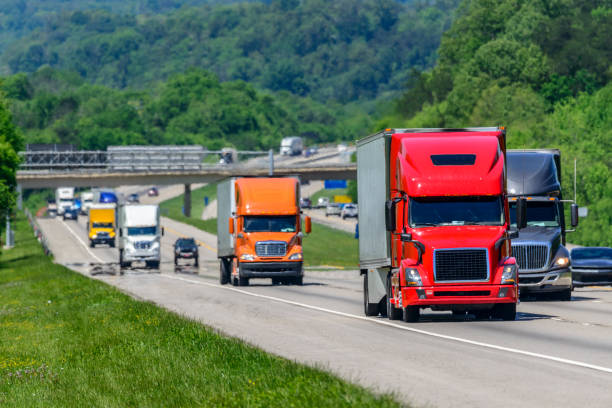
Being a truck driver has both perks and downsides. On the one hand, you experience the open road daily, earn a solid living without being tied to a desk, and enjoy work autonomy for much of the day. However, a trucking career also means hours (sometimes weeks) away from family and relentless hours that strain your body.
Fortunately, you can counteract these pain points if you choose the right home state to operate from. For instance, states with the most trucking jobs give you proximity to freight bases, which translates to more home time and less unpaid deadhead driving. This article highlights the best states for truck drivers and which factors to consider when weighing your options.
Factors To Consider When Choosing States as a Truck Driver
Although some states are lauded as top choices for truck drivers, what works for one driver might not necessarily work for you. To ensure your choice aligns with your career aspirations and lifestyle needs, prioritize the following factors to make the most convenient choice.
Type of Driving Jobs & Earning Potential
The trucking job industry varies from state to state, which directly influences your earning potential. Let's take California, for instance. It's home to the busiest U.S. ports (L.A./Long Beach) as of Q1 2025 and serves close to 40 million consumers. This means California has a steep demand for local and short-haul labor to move containers from the ports to nearby distribution centers and warehouses within state boundaries. As a result, there would be more local and regional driving jobs than over-the-road (OTR) trucking opportunities.
If you specialize in local truck driving, it wouldn't just be convenient to settle in such a state, it'd mean more hourly pay given the high demand for local drivers. It'd also mean more family time and a chance to bond with local people between shifts.
But if you choose OTR jobs while living in California, you'll endure longer commutes and deadhead miles while battling the state's high tax costs. All this to say, don't just look for the highest paying states for truck drivers. Instead, target regions where your niche dominates so you can enjoy more predictable work and maximize earnings and home time.
Job Market
While it's a good idea to prioritize states where your job specialization dominates, you should still remember to assess the job market. When a state has many trucking employers, it often has companies that specialize in different freight types. This allows you to gain experience in various sectors and graduate into higher-paying niches. Moreover, you'll have alternatives if your current position doesn't work out or experiences lulls. A strong job market for truckers also means competition for drivers, driving up average wages.
Cost of Living
A high net income is insignificant if the cost of living (COL) erodes your purchasing power. A $100,000 salary stretches much further in Tennessee than in California, due to California's high living costs.
It's not all about finding the highest-paying states for truck drivers. States with a low cost of living for truck drivers could still be attractive options even if the average salary is lower. A state with a slightly lower average salary but much lower living costs can lead to financial stability and a high quality of life. To determine whether the COL aligns with your salary, you should compare housing, state and local taxes, and daily expenses (fuel, food, and utilities) against your take-home pay.
State Trucking Regulations and Business Environment
Are you planning to start your fleet at some point in your career, or are you an owner-operator? If you answered yes to either question, you should conduct an interstate vs. intrastate trucking review before you settle. This state trucking regulations comparison could shed some light on where you want to move.
Some states embrace trucking as essential and maintain regulations that prioritize safety without creating unnecessary administrative burdens. Such trucking-friendly states typically have efficient permit processes, reasonable weight limits, and enforcement approaches that focus on genuine safety violations rather than revenue generation through fines.
On the other hand, some states run regulations that make trucking operations more difficult, such as excessive permit requirements. If the regulations are acceptable to you and your business, you should assess the overall business climate as well. Generally, business-friendly states have more manufacturing, distribution, and economic activity, which creates more freight opportunities. They also invest more in infrastructure maintenance and improvements that benefit commercial traffic.
Freight Availability
While there are other payment structures like hourly pay, per load, or a percentage of the load's revenue, cents-per-mile (CPM) is the most common method for over-the-road (OTR) and regional drivers. In other words, your paycheck correlates with the distance you cover while hauling freight. In that light, you must consider freight availability when comparing the best states for truck drivers. Target states with:
- Major ports
- Agricultural/industrial hubs
- Distribution Centers
Working and living in such states means less downtime waiting for loads, more consistent miles, and, ultimately, good net income. Remember, freight availability also impacts the average truck driver's salary. Areas with limited freight might see lower rates as drivers compete for available loads, while regions with abundant freight and lower driver population typically support higher rates.
The Best States for Truck Drivers
After evaluating American states based on the above factors, we identified and shortlisted the following as the best states for starting a trucking business or being a truck driver.
1. Texas
Texas is one of the leading trade and logistics hubs in the U.S. and across North America. The Lone Star State has a thriving oil and gas industry and booming agricultural, manufacturing, and technology sectors.
Moreover, Texas sits at the crossroads of major freight corridors, with interstate highways connecting all cardinal directions. As a result, the state boasts the highest trucking freight volume by state. All this high freight availability for drivers, regardless of direction, results in consistent income and less "deadhead."
Texas's dynamic economy has also given rise to numerous trucking companies (over 66,000), creating a highly competitive job market for drivers. The growth has resulted in plenty of local, regional, and OTR jobs, and better salary averages.
For example, local drivers in major metropolitan areas like Houston, Dallas-Fort Worth, San Antonio, and Austin can earn between $55,000 and $70,000 annually. Once you add in opportunities for overtime and specialized hauling, a driver's check will just get even bigger.
On top of that, Texas offers relatively affordable housing, fuel, and everyday expenses compared to coastal states when you live outside major metros like Austin and Dallas. In addition, the Lone Star State has no personal income taxes, meaning drivers get to keep more of what they earn while stretching it out further with the affordable living costs.
The trucking industry is also essential to the state's economy. Texas has trucking-friendly regulations, such as an efficient permit process. It also invests heavily in highway infrastructure, boasting the nation's largest highway and interstate networks. Some of these, such as the Houston 1-610 and Dallas's 1-635, are specifically designed to divert truck traffic away from congested city centers. This design makes truck driving less strenuous, especially for local and regional drivers who constantly haul goods within state boundaries.
Simply put, Texas is a truck driver's paradise. The job market and environment are friendly, the pay is good, and there is a diverse community of fellow truckers surrounding you.
2. Florida
Florida is an outstanding choice for truck drivers who prefer coastal areas. The state's extensive coastline is home to major population centers and a thriving tourism industry, which consistently generates a high demand for goods.
Florida's bustling seaports serve as the U.S.'s gateway to Latin America and the Caribbean, creating substantial import/export freight opportunities. This results in abundant job opportunities, particularly for those interested in local and regional hauls.
Moreover, the Sunshine State's tropical climate means no snow, ice, or harsh winters that plague northern states, so local and regional truck drivers can enjoy safer driving conditions.
With no state income tax, a high annual salary average ($145,557 ), and relatively manageable living costs (outside of premium beach areas), Florida checks all the necessary boxes a state needs to support a healthy truck driver lifestyle.
3. Tennessee
At the crossroads of America's commerce highways, Tennessee shines for its connectivity. Interstate 40 runs east-west, connecting it to the Atlantic Coast to California, while Interstate 75 provides a vital north-south corridor linking Michigan, Florida, Georgia, Kentucky, and Ohio.
As such, drivers based in Tennessee reach approximately 75% of the U.S. population within a day's drive. Tennessee is an ideal hub for company drivers seeking diverse route opportunities and owner-operators who need to minimize deadhead miles as much as possible. The presence of major distribution centers from companies like FedEx (headquartered in Memphis), Amazon, and numerous automotive manufacturers creates steady freight demand and competitive rates for local and regional hauling.
To add icing to the cake, Tennessee has no personal income tax. The lack of state income tax becomes particularly significant for owner-operators as they avoid potential thousands of dollars in state tax obligations that would otherwise reduce their take-home pay.
The cost of living in the Volunteer State is about 10% lower than the national average. In many areas, median home prices enable drivers to purchase quality homes for $200,000 to $300,000 outside hotspot areas. This affordability also extends to rental markets, where drivers can find decent apartments or small homes between $800 and $1,200 monthly in areas outside Nashville's premium neighborhoods.
4. Indiana
Indiana provides a surprisingly strong environment for truck drivers. The Hoosier State handles an immense amount of freight annually, frequently ranking among the top 10 busiest states for commercial freight.
This success is largely thanks to its solid manufacturing base. The state produces everything from automotive components and steel to pharmaceuticals and consumer goods, creating diverse freight opportunities. Even more impressive, Indiana is at the intersection of major transportation corridors such as I-65, I-70, I-74, I-80/90, I-69, and I-465.
Due to its diverse industries, central location, and great transportation network, Indiana has seen a surge in warehousing and distribution centers across major cities. The presence of the second-largest FedEx Express hub in the world is in Indianapolis, reflecting the state's logistical importance.
This dense network, with its diverse industries and numerous distribution centers, generates plenty of freight opportunities, which reduces idle time for drivers. The state's well-developed highway infrastructure also facilitates seamless freight movements for drivers.
The job market in Indiana is diverse and stable, with opportunities ranging from small regional carriers to major national companies. The state's manufacturing base provides career stability even during economic downturns.
Indiana adheres to federal hours of service (HOS) rules and maintains a flat state income tax rate of 3.23%, among the nation's lower rates for state income taxes. For a truck driver earning $55,000 annually, the rate would translate to approximately $1,777 in state income tax, which is much less than neighboring states like Illinois (4.95%).
For owner operators, commercial vehicle registration fees in Indiana range from $20 for a 7,000-pound truck to $956 for trucks over 66,000 pounds. Regarding the cost of living, the Hoosier State is among the most affordable. It has a COL index of approximately 11.1% below the national average, with people finding homes around $185,000 (in 2024), which is well below the national average.
5. Ohio
Ohio offers both local and regional trucking opportunities. The state is within a 1-day drive of 60% of the U.S. population and major manufacturing and agricultural zones such as the Mid-Atlantic, Midwest, and even parts of the South.
As a result, Ohio has a massive demand for regional route drivers, leading to higher wage averages. Drivers also experience fewer deadhead miles, as major cities within the state (Columbus, Cleveland, Cincinnati, Toledo, and Dayton) have dense networks of:
- Warehousing and distribution: "Final mile" delivery, dedicated supermarket/food/beverage routes, retail replenishment.
- Manufacturing and ports: Short hauls supporting factories, steel mills, and Great Lakes ports (e.g., Toledo).
- Construction and fuel: Day-cab dump trucks and tankers serve local sites.
Major carriers such as Schneider National also have OTR terminals here, meaning plenty of OTR opportunities exist. The state also has well-maintained highways and a decent volume of truck stops and services.
The average base truck driver salary in Ohio is about $80, and the cost of living is 8.1% lower than the U.S. average. Although truck drivers have to pay a state income tax, Ohio has a progressive income tax system with rates ranging from 0% to 3.5%, which are relatively low compared to other states with income tax.
Choosing the Best Trucking State
The highest-paying opportunities might not be worth it if they require sacrificing too much family time. At the same time, the most affordable states might not provide the earning potential to meet your financial goals. To settle on the best state for truck drivers, you'll need to carefully weigh the previously mentioned factors against your personal priorities and circumstances. For example, you could take time to evaluate your current life stage and long-term objectives and contrast them against the cost of living. Remember, you can always relocate to more favorable states as your circumstances change.
As always, wherever the road may take you, remember the importance of protecting yourself and your livelihood, especially from the unexpected. With a warranty plan from America’s Trucking Warranty, keep it rolling with confidence knowing you’re protected from coast-to-coast. Contact us today to see how we can best protect you.