Truck Driver Etiquette Guide: Road & Truck Stop Manners
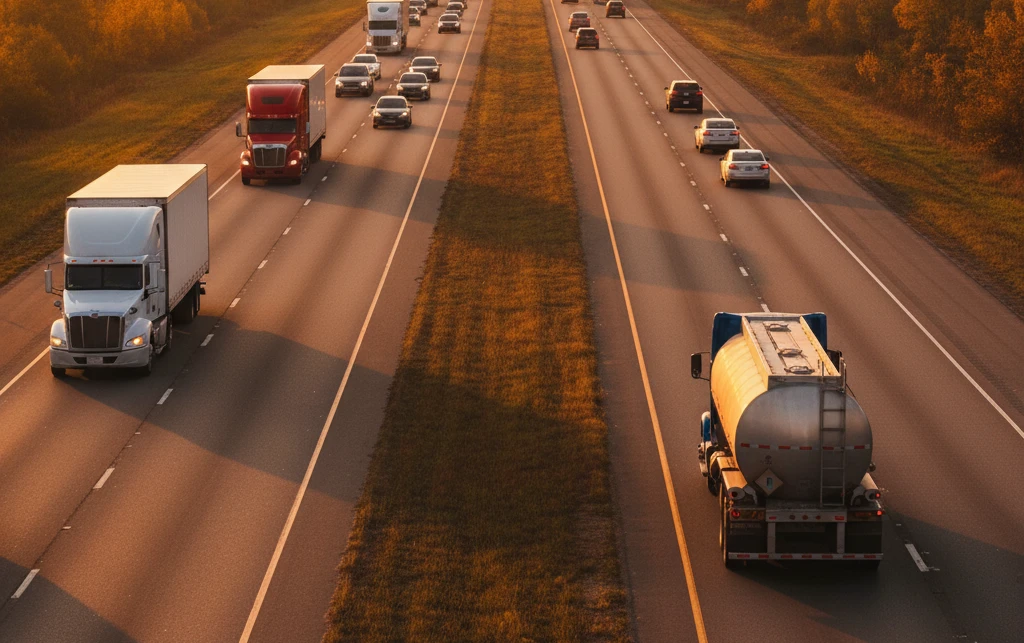
North America's freight network is a living entity. One in which professional truck drivers are the lifeblood, moving freight continuously from ports, factories, warehouses, and store docks. As horsepower and route programs keep freight moving, manners make those miles safe, seamless, and enjoyable.
Of course, truck driver courtesy is not just about polite highway manners. It's a pillar of respect and safety on the road. It enables 80,000-pound behemoths to coexist with family sedans, cyclists, pedestrians, and other large vehicles. But unlike FMCSA regulations, which are written into law, these courtesies aren't specified in code—they're often acquired through experience, instructed through CB radio, or learned in tense moments when someone breaks them.
This guide captures the unspoken essentials of life on the road. Whether you're setting the rhythm for rookies or refining your own tempo, these tips are here to help you maintain your professionalism in gear with every mile.
On-the-Road Etiquette
Interstates are work zones at high speeds for freight, where seconds make a difference and a single mistake can cost lives or livelihood. More than that just showing that you're complying, proper on-the-road etiquette demonstrates that you're a trusted driver.
Positioning, Passing, & Lane Discipline
Semi driving is full of the burden of blind spots—"No-Zones"—most four-wheelers never even consider. They cover somewhere in the range of 30 feet behind the trailer, a whole car length to the side of each fuel tank, and a big triangular area in front of the cab. Remaining in these zones, especially in the vicinity of other truckers, is a surefire formula for disaster. A sound safety rule of thumb? If you can't see their mirrors, they likely can't see you.
Stopping distance is yet another area where pros dominate. At 65 mph, a fully loaded truck could take the length of two football fields to stop. It's for this reason that veteran drivers leave seven seconds of space on dry pavement, 10 seconds in rain, 12 seconds on ice, and greater when reduced visibility exists in snow or fog. That cushion provides time for reaction, whether to a deer bounding into the lane or to a four-wheeler slamming on his brakes.
Passing, too, may be as much an indication as a physical act. When you decide to pass, keep it consistent. Downshift, increase speed by 3–5 mph, and execute the pass smoothly and consistently. No "elephant races" riding side-by-side for five miles. Signal ahead of time, look in your mirrors twice, and only join back when you can see both trailer doors clearly in your mirror. When someone passes you, either maintain your speed or slow down a bit so they can safely get back in.
Flash your beams when their vehicle has fully cleared your front bumper to give the universal “all clear” signal. And when someone flashes you, reciprocate with a quick pull of the marker lights. It's the highway's unwritten handshake.
Spacing: A Veteran's Secret Weapon
Good drivers know power is key, but space is king. Picture yourself cresting a Wyoming hill on a snowy day. Suddenly, brake lights up the road glow like flares as a box truck skids sideways. If you're three seconds behind, you're stuck. But with a seven-second margin, you may be able to steer around it, downshift, and make it through without a scratch.
Veterans often model this type of spacing behavior to rookies and even drop polite CB advice: "Ease off that tail, driver." Those types of friendly reminders and an eagle eye on space can be the difference between a close encounter and an easy exit.
Merging, Signaling, & Visibility
Although some equate merging with bullying and aggression, it's all about timing. In dense traffic, the zipper merge (in which vehicles alternate entry) is usually the safest and most efficient method. Large trucks have slower reaction times, so signal at least three full blinks before changing lanes. That preliminary notice permits others to prepare for your movement instead of react in panic.
Lighting also plays its part in courtesy and safety. Remember to dim your high beams for oncoming traffic. And in a crowded truck stop parking lot at night? Always point your auxiliary or LED lights down; you're not the only one trying to sleep.
A couple more quick-gain habits:
- Cut off your turn signal as soon as you've completed the turn; a forgotten blinker can confuse traffic behind you for a half-mile.
- On ascents slower than 40 mph, flip on your hazards so following drivers anticipate slow travel.
- Adhere to the Rain Rule of Three: When your wipers are on high for over three minutes, reduce speed by three miles per hour and add three seconds to your following distance.
It's easy, repetitive beats like this that ensure rigs remain upright and freight on time.
Local Trucking
CB Channel 19 might sound old-school, but in areas with no cell reception, it remains an essential tool for coordination, alerts, and real-time safety communication.
Knowing what to say (and how to say it) makes all the difference. Use clear and concise updates like:
- “Eastbound, black ice just before the river bridge.”
- “Wrecker in right lane at mile marker 214.”
- “Appreciate the back door, driver—you’re clear.”
These will help build rapport while keeping traffic flowing.
That discussion is even more necessary when the weather changes. Weather in marginal regions can change fast—a storm in Texas will drop visibility from miles to yards in a matter of seconds. The earlier you voice up or slow down, the better. If you see another driver pulled over, flash your hazards, move over, and check on them on the CB: "You good, driver?"
And when the emergency personnel do come, the same mindfulness is true. Flash hazards, step off the gas pedal, and let them do their job. Smooth, educated responses prevent secondary crashes and enable emergency personnel to work safely.
Convoy Etiquette & Avoiding Roadblocks
Ad-hoc convoys, especially around holiday time, have a tendency to raise spirits and can even lower fuel usage. But manners, etiquette, and general trucking road rules still must be observed.
Maintain a 300-foot minimum distance between rigs so traffic can proceed if needed. Designate a lead truck to call out road hazards and slowdowns. And when traffic begins to build up behind your convoy, break formation. A rolling roadblock doesn't sound so bad, but it's infuriating to drivers and draws unwanted attention from the authorities.
Maintaining Professionalism: Distraction, Maintenance, & Emotional Control
Phones are the biggest distraction risk on the road. Federal law already forbids handheld use (except in emergencies), but even hands-free systems can become dangerous if you’re mentally disengaged. Use voice commands when necessary and avoid scrolling or texting, as your career and safety depend on it.
Etiquette also extends to the condition of your rig. A flapping strap or dirty lights speak volumes about carelessness and unprofessionalism. Checking a quick walk-around at each fuel stop prevents infractions, keeps everyone else safe, and saves CSA points.
And when someone brake-checks you or cuts you in line, back away. Take a deep breath. Document it in your log if it happens. But don't take the bait. Staying calm protects your cargo and your reputation.
Scale House Diplomacy & Logbook Accuracy
While ELDs record each throttle press, how you log pre-trips and arrive at scale houses still matters. Incomplete logs or filth in your cab will get noticed.
Approach the scale at the posted speed. Greet the officer professionally. A clean cabin, tidy documents, and correct logs increase the likelihood of a waved-through inspection. Manners and readiness are more effective than horsepower under these circumstances.
Preparation for Breaks: A Professional's Checklist
Before taking your 10-hour break:
- Inspect trailer doors and locks.
- Review load details, delivery limitations, and time zones.
- Send out an updated ETA.
- Sweep the trailer if delivering food-grade freight next.
- Stretch and hydrate—your body is part of your arsenal, too.
Those kinds of small habits add up. Breaks are downtime, but they're also opportunities to get ahead.
Fitness, Food, & Mental Health on the Move
A desk job, fast food, and hours spent by oneself tend to wear even the toughest drivers down. But even tiny changes can have massive payoffs.
Pack the resistance bands. Jump rope at the rest stops for 10 minutes. Replace two fried meals per week with grilled. Bring water, not soda. These are simple choices that maintain your health and your energy level stable mile after mile.
And emotional health is equally crucial. More than just unpleasant, isolation and fatigue can be serious hazards on the road. Call friends and relatives. Listen to meditation podcasting. Journal. Get off duty when the time comes. Remember, a level head is as vital as a level hand.
Truck Stop Etiquette: Off-Road Professionalism
Once the drive is completed, new rules begin that center around truck stop courtesy. Parking lots, coffee shops, and shower lines are public spaces, and your reputation depends on how you treat them.
Parking & Fuel Island Courtesy
Back slowly in parking lots. Unnoticed kids, animals, and debris can appear in your path quickly. Always back in, except when you're using a pull-through. That way, you're not scaring others at 5 a.m. with a loud backup alarm.
Avoid fire lanes and “creative” parking, even if you’re tired. If the lot’s full, call ahead to nearby industrial areas or staging sites. Improvisation isn’t worth the risk of being towed or blocking emergency access.
At fuel islands, promptly refuel and then move on. Don't leave your rig in the fuel bay while you run in for a drink or a snack. You're only taking a five-minute break, but multiply by 10 trucks, and now you've got an hour of wasted time in a jammed-up line.
And for your fellow neighbors: don't idle unless necessary. If you've got an APU, use it. If you've got a traveling dog, leash it up immediately and clean up after them.
Inside the Truck Stop: Shared Space, Shared Standard
Truck stops are a microcosm of the trucking world itself. A location where beginners, old-timers, OTR haulers, and day-cab locals all congregate. With so many people shuffling through tight spaces, the smallest careless act can ruin another driver's break.
The golden rule here is simple: Treat it like home, even if it's not.
When using showers, move with purpose. You’re not there to relax. Clean up any puddles or clutter and exit promptly. If you’ve booked a shower and started laundry, keep track of both. Leaving your clothes spinning with no plan to retrieve them just creates friction and forces the next person into an awkward spot.
In the lounge or dining area, you’re part of a rhythm. Taking a corner booth to sprawl or using speakerphone without headphones inconveniences the people around you. Truck stops aren’t known for their quiet ambiance, but that doesn’t mean they have to feel like chaos.
A few small gestures that consistently stand out:
- Replacing the coffee pot instead of leaving it empty
- Tossing your trash instead of leaving it on the table
- Holding the door open for someone with food, coffee, or a tired child
These are not difficult, but they are actions that reflect sensitivity and respect.
Community, Camaraderie, and When To Step Up
Not every mile on the road offers a friendly face, but when one comes along, it can change a traveler's whole day.
Camaraderie among drivers doesn't necessarily have to happen with a conversation. It might be a momentary glance, a flicked hand away from the wheel, or a call over the radio that says "Back door's clear, big truck." These brief, momentary gestures create an exchange of respect back and forth down every road.
The people who succeed in this career often have a quiet code. They'll stand up when someone's got a blind back or give parking advice on the CB. They don't say anything about it. They just do it.
However, the wrong sort of small talk can ruin that good faith. Telling too much at a truck stop counter—where you're going, what you're carrying, how much you get paid—seems harmless but can be hazardous. Not everyone you're speaking to is another driver. The most cautious operators are often the most reticent about details.
So, yes, help others. Provide equipment, a lift, even a second pair of eyes. But don’t mistake helping for showmanship. The best drivers let their actions speak for them, and silent competence makes a more enduring impression than stories ever could.
Dock Etiquette: Turning Reputation Into Freight
Arriving at a shipper or receiver's terminal signals that it's time to shift to an even higher level of professionalism. How you conduct yourself from this point on isn't just representative of your company, it's representative of you.
Shippers, receivers, and warehouse crews notice patterns in the drivers they work with. Some days are busier and more stressful than others, and small delays or mix‑ups can ripple through the schedule. Companies run best when things are predictable, so if you’re the driver who keeps the process smooth and straightforward, you'll stand out for the right reasons.
Show up a few minutes early when possible. Wear the required gear. If signs or gate instructions are posted, follow them. Asking questions is fine, but ignoring basic expectations (like disconnecting your red airline or chocking wheels) slows everything down and sets a poor tone.
If you are behind, don't panic, and be sure to make good use of your time. Utilize the time to catch up on log edits or stretch. Staying calm and constructive will go a long way in moving the day forward in the right direction.
Last, respect the yard. Avoid blocking scales, tailgates, or fuel access. If you pull into a dock and leave broken pallets or torn wrap behind, the next driver will be stuck with the cleanup. You wouldn't want that if you were in their shoes—and you don't have to look very far to realize that most of trucking is one big circle of return favors.
Final Mile: How You Leave Matters Most
You’ve backed into the dock and secured the load. It’s tempting to treat that moment as the finish line, but the first five miles out of any customer yard are where costly mistakes tend to surface.
Tiedowns relax. Reefer units glitch. A stack inside your trailer may shift with the first turn. Smart drivers don’t wait to find out the hard way. They ease into motion, then pull off somewhere safe and perform a quiet follow-up check.
This quick stop lets you:
- Confirm seals are in place and documented.
- Re-check strap tension on flatbeds.
- Listen to the reefer’s hum or inspect its temp reading.
- Check that nothing has come loose or gotten out of adjustment.
That last step says a lot more about you than any handshake on the dock could. It tells your dispatcher, your customer, and the highway patrol that you finish what you start. It also saves you serious time and hassle later on.
Rolling Forward With Confidence
Truck driver etiquette turns long, solitary miles into a coordinated, supportive cadence of commerce. From the weight station to the truck stop, your daily routine dictates how you're viewed and how smoothly your day unfolds.
Even the most courteous driver, though, can't keep every engine from breaking. That's why America's Trucking Warranty features coast-to-coast coverage, on-the-scene mechanics, and stress-free claims—so you're protected, even when fortune isn't being polite.
Drive smart. Drive safe. And drive with the confidence that comes from combining professionalism with protection.
Call America's Trucking Warranty today and roll on with peace of mind.