The Ultimate Guide to Commercial Truck Fuel Cards: How to Maximize Savings and Efficiency
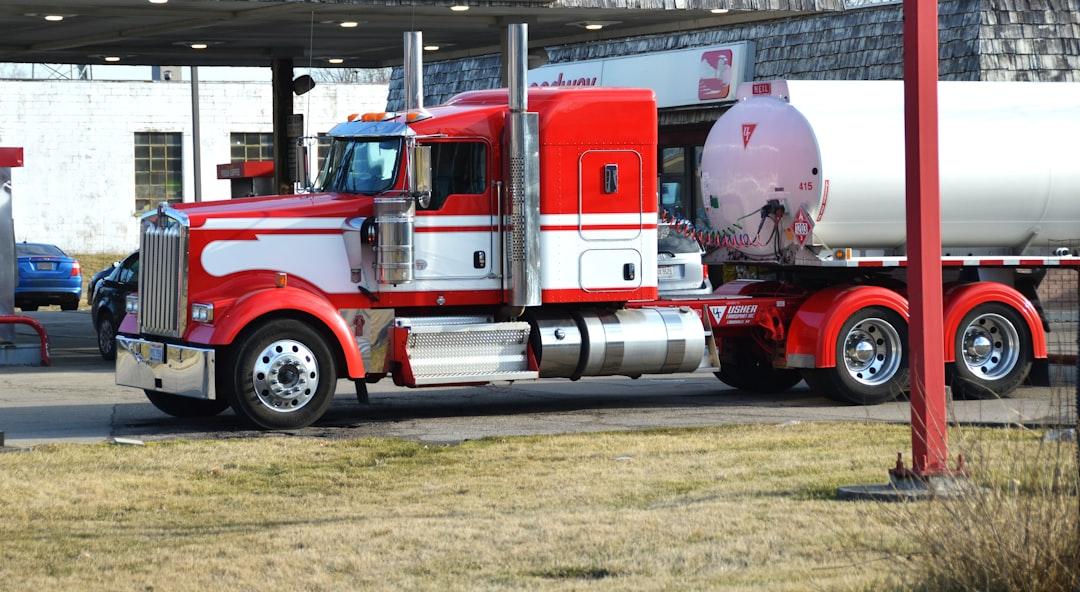
Diesel fuel is a significant portion of any commercial trucking operation’s financial overhead, often accounting for 20–30% of a fleet’s average marginal expenses. Fuel costs are highly volatile, sometimes shifting daily or weekly. This inconsistency can wreak havoc on your trucking operation’s budget.
Commercial truck fuel cards help fleets of all sizes monitor and control fuel costs for regional, interstate, and international semi-truck transport. Consistent diesel fuel discounts for truckers save money at the pump, while data tracking identifies ways to boost fleet operating efficiency.
This comprehensive guide covers how commercial truck fuel cards work, their advantages and pitfalls, and the best fuel cards for owner-operators, small- to mid-sized trucking operations, and enterprise fleets.
More Than Just a Credit Card
Although similar to traditional business credit cards, fuel cards are a niche financial product specifically created for the transportation industry. They offer deep discounts on diesel fuel and commercial trucking-related products, often without a credit check.
In addition to reduced prices, truck fuel cards allow data tracking to help fleet managers control spending and prevent unauthorized transactions.
How Commercial Fuel Cards Work
A commercial fuel card works similarly to a business credit card. The trucking business must first apply for an account, providing the company’s name and address, fleet size, business income, fuel usage, and other details. For some cards, a credit check may also be required.
Prepaid fuel cards do not usually require a credit check, as they are already secured by existing funds. You may refill the card through bank transfers, debit card payments, or digital wallet payments, among other methods.
Non-prepaid truck fuel cards, also called fleet credit cards or charge cards, are billed to the trucking company monthly. The card issuer usually provides one bill with itemized charges for each user. These cards are typically interest-free because the bill must be paid in full by the due date. This buy-now, pay-later method usually requires a credit check.
On the driver’s end, commercial fuel cards work similarly to a debit card. Truckers pull into an authorized truck stop or gas station, insert the fuel card, and enter their PIN or driver ID. Depending on the card’s settings, the driver may need to provide other verification details, such as a vehicle number or odometer reading.
Closed Loop vs. Open Loop Systems
When selecting the right card for your trucking operation, look into where discounts apply. Some commercial truck fuel cards are closed-loop systems, only valid at specific truck stops.
For example, Pilot’s Axle Fuel Card® provides discounts at Pilot Flying J locations throughout the U.S. and Canada, but you cannot use it at other gas stations. Love’s Express Billing Program is similar, offering discounts only at Love’s truck stops.
Many companies that offer closed-loop fuel cards have little to no presence away from major interstates. While these cards might work for local and regional shippers, they are problematic for long-haul and rural truckers who may not have consistent access to a specific fueling company.
Other providers offer cards that work almost anywhere, though they are often limited to participating locations. For instance, P-Fleet fuel cards offer discounts at fuel stations and truck stops in their network, which includes Love’s, Conoco, and numerous independent fueling stations. WEX also offers fuel cards accepted at 95% of U.S. gas stations, and Fuelman partners with more than 40,000 locations across the U.S. to provide fuel discounts.
If you’re doing long-haul or rural routes, an open-loop fuel card is a better option — you can reap the benefits of the fuel card without having to hunt for a specific station.
Discount Models
Commercial fuel cards have different discount models with benefits for different types of trucking operations. The two most common discount methods for truck fuel cards are:
-
Cost-plus pricing: With this method, the cardholder pays the wholesale price of diesel fuel plus a fixed fee set by the station. The wholesale price is the Oil Price Information Service (OPIS) diesel price, plus current state and federal taxes.
-
Retail-minus pricing: Cards with retail-minus pricing give the cardholder a flat discount, usually $0.05-$0.15 per gallon off the posted cash price at the pump. Under this plan, the cardholder pays the full amount up front and receives a rebate later.
The best discount model for your fleet will depend on your location. Drivers in areas with high fuel shipping costs, like Hawaii and Alaska, often pay more at the pump, so pricing based on OPIS rates may result in lower fuel costs.
Trucking operations across the contiguous U.S., where high shipping costs are not a concern, benefit from the transparency and predictability of retail-minus pricing — what you see on the pump is what you get, less the fixed discount.
The Major Benefits (The “Why”)
Most commercial truck fuel cards save trucking operations money with immediate per-gallon savings. They also provide data tracking and reporting that help reduce administrative costs and fraud.
Cents-Per-Gallon Savings
Heavy-duty trucks can hold 300 gallons of diesel fuel. Even a $0.15-per-gallon discount can save $45 per fill-up. With only one refueling stop per week, you save $2,340 per year, per vehicle.
Automated IFTA Reporting
The International Fuel Tax Agreement (IFTA) is an agreement between the lower 48 U.S. states and all Canadian provinces to report fuel use taxes for each state on a quarterly basis. Automated reporting through truck fuel cards saves trucking companies hours of IFTA paperwork by automatically tracking how much fuel the driver purchases in each state.
Level 3 Data Capture
Drivers must usually enter a PIN, truck number, and odometer reading when using a truck fuel card. This allows the fuel card provider to receive detailed information about purchases, including fuel grade, cost per gallon, taxes, and product types. This Level 3 data capture provides more transaction transparency, allowing fleet owners to identify and prevent skimming or driver fraud.
Choosing the Right Card for Your Business Size
Selecting the best truck fuel card depends on the size of your transportation operation. Owner-operators have different financial pressures and monitoring needs than small fleets and large enterprise operations.
Owner-Operators
The best fuel cards for owner-operators are those with zero monthly fees, robust rewards programs, and high pump price transparency. Love’s Express Billing Program offers $0.20 per gallon off and does not charge any additional fees for transactions or account maintenance. It provides real-time data and customizable reports for smooth IFTA fuel tax reporting.
If you need more versatility, TCS’s Owner-Operator Fuel Card provides fuel discounts through a cash-secured fuel card at more than 12,000 participating locations. There are no transaction fees at over 2,300 in-network fuel stations. An online portal lets you track your fuel expenses for easier accounting and IFTA reporting.
The Truckstop Fuel Card offers up to $2.00 per gallon savings and 30% off vehicle maintenance expenses. They are almost universally accepted at truck stops and fuel stations across the country. You don’t need a business credit score to sign up for this card.
Small to Mid-Sized Fleets
When comparing fuel cards for small fleets, look for cards that offer transaction monitoring and controllable lines of credit. The Pilot Flying J Axle Fuel Card provides consistent at-the-pump discounts and easy transaction monitoring through their customer portal.
If your fleet operates in areas where large truck stops are not readily available, consider an open discount card like the ES Advantage Card, which offers diesel discount rates and fuel discount locators for more than 1,300 fuel stops across the country. The company offers options for transaction monitoring and spending limits, so you can control how your drivers use their cards.
Enterprise Fleets
If you operate a large enterprise fleet, you need a fleet card that supports application programming interface (API) integration with your transportation management system (TMS).
Comdata OnRoad provides a comprehensive fleet fuel management system with data tracking and analytics. With any of the Comdata large fleet fuel cards, you can access centralized controls to set spending limits, turn cards on and off, and receive real-time fraud and misuse alerts through their online portal or mobile app.
The WEX Fleet Card offers similar services, with fuel rebates, expense tracking, automatic accounting, and spending controls. This program also lets you automate purchase limits and fueling policies to reduce fraud and control spending.
Both WEX and Comdata offer cards with near-universal acceptance in fueling stations and truck stops across the country. You can also program spending to cover related company expenses, such as hotel stays and vehicle maintenance, which keeps all your drivers’ spending in one centralized, trackable location.
The Hidden Costs to Research
While you can get excellent at-the-pump savings from commercial truck fuel cards, many programs have hidden costs to consider. Below are a few of the most common fees and costs associated with fuel cards:
-
Transaction fees: Some cards charge a transaction fee of $1.50-$3.00 every time you swipe. The RXO Fuel Card, for example, charges a $1.00 transaction fee for in-network use and $2.00 for out-of-network use.
-
Account maintenance fees: Certain providers require a monthly fee to maintain the account. Fuelman, for example, charges a $59 flat monthly fee for all fuel cards, while RXO charges a $7.95 monthly account maintenance fee.
-
Out-of-network penalties: Out-of-network fees can apply to any transaction outside the provider’s authorized network. OTR Solutions, for instance, doesn’t charge any in-network fees, but they charge a $4.00 fee per out-of-network transaction.
Some fees pay for themselves through significant discounts, but you should take the time to calculate all the costs to avoid paying more than the savings you receive.
Security and Fraud Prevention
Modern cards use a variety of tracking methods, including product analysis and geo-fencing, to protect the account from skimming. Geo-fencing technology tracks the truck’s location, ensuring that it is physically at the fuel station when the card is swiped.
Product data analysis identifies unusual purchases, while spending controls let trucking companies limit spending to products and services within the scope of the driver's responsibilities.
Protect Your Fleet From the Unexpected With Rig Nation Coverage Through ATW
Whether you are an independent owner-operator or the manager of a large-scale enterprise fleet, you benefit from the cost savings of a commercial truck fuel card. Fuel cards function as a business credit card or prepaid debit card, offering unique discounts and product-tracking services tailored to commercial trucking needs.
Not all fuel cards are created equal, so review the fees and discount terms to avoid paying more than you earn. Take the time to assess each card’s tracking and reporting methods to streamline IFTA reporting and prevent fraud.
While weighing the risks and advantages of planning ahead, consider coverage from America’s Trucking Warranty for additional support on the road. We provide full coverage for repairs anywhere in the U.S., and we will pay the full retail cost to get you back on the road. We also partner with Rig Nation to deliver fuel in case you run out of gas during a long haul.
Contact us today for a free quote.